From RAD to Real
10:15am – 11:15am on Saturday 11/7
The children who challenge every system they enter — the ones whose placements fall apart, whose behaviors defy explanation, and who seem unreachable no matter how much care and commitment surrounds them — are not mysteries. They are survivors. Survivors of early relational failure so profound that their nervous systems reorganized around protection rather than connection, around survival rather than growth. When the adults who serve them understand that, everything changes.
Reactive Attachment Disorder, ADHD, ODD, Conduct Disorder, DMDD — the diagnoses in the case file, the IEP, the treatment plan — rarely capture what is actually driving the behavior. What is driving it, in the vast majority of the most complex and treatment-resistant children in the foster care, child welfare, and faith-based ministry world, is Early Developmental Trauma: a relational and neurobiological wound sustained during the critical developmental windows when a child’s brain, nervous system, and capacity for connection were still being formed. When caregivers could not — or did not — meet the six foundational needs of early childhood, the child adapted. That adaptation is what we now call the Developmental Vacation®.
This session, led by Dr. Daniel Sanderson — internationally recognized Clinical Psychologist and creator of the Developmental Vacation® model — and Tana Frey, LCMHC, CSAT, translates 30+ years of frontline clinical experience into a clear, practical, immediately applicable framework for everyone in this room: foster parents trying to understand why love alone isn’t breaking through; social workers and CASAs carrying cases that never seem to move; educators watching a child self-destruct in their classroom; and ministry leaders trying to support families who are quietly falling apart in their congregation.
From RAD to Real is not a session about adding complexity to an already overwhelming picture. It is a session about clarity — a framework that makes the hardest children understandable, the most baffling behaviors interpretable, and the path forward visible. Attendees will leave not just with knowledge, but with tools they can carry into their next home visit, staffing, classroom, counseling session, or conversation with a family that has run out of answers.
Reactive Attachment Disorder, ADHD, ODD, Conduct Disorder, DMDD — the diagnoses in the case file, the IEP, the treatment plan — rarely capture what is actually driving the behavior. What is driving it, in the vast majority of the most complex and treatment-resistant children in the foster care, child welfare, and faith-based ministry world, is Early Developmental Trauma: a relational and neurobiological wound sustained during the critical developmental windows when a child’s brain, nervous system, and capacity for connection were still being formed. When caregivers could not — or did not — meet the six foundational needs of early childhood, the child adapted. That adaptation is what we now call the Developmental Vacation®.
This session, led by Dr. Daniel Sanderson — internationally recognized Clinical Psychologist and creator of the Developmental Vacation® model — and Tana Frey, LCMHC, CSAT, translates 30+ years of frontline clinical experience into a clear, practical, immediately applicable framework for everyone in this room: foster parents trying to understand why love alone isn’t breaking through; social workers and CASAs carrying cases that never seem to move; educators watching a child self-destruct in their classroom; and ministry leaders trying to support families who are quietly falling apart in their congregation.
From RAD to Real is not a session about adding complexity to an already overwhelming picture. It is a session about clarity — a framework that makes the hardest children understandable, the most baffling behaviors interpretable, and the path forward visible. Attendees will leave not just with knowledge, but with tools they can carry into their next home visit, staffing, classroom, counseling session, or conversation with a family that has run out of answers.
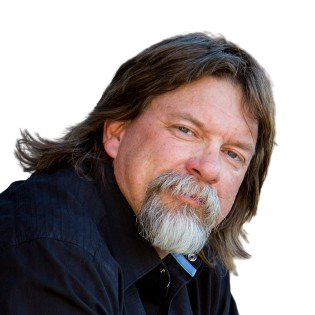
Dr. Dan Sanderson
More info...
More info...
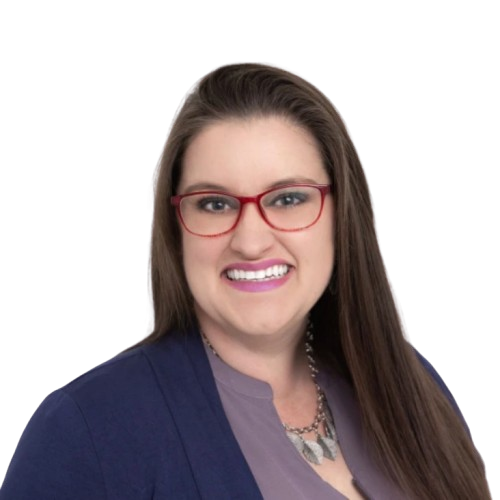
Tana Frey
More info...
More info...